
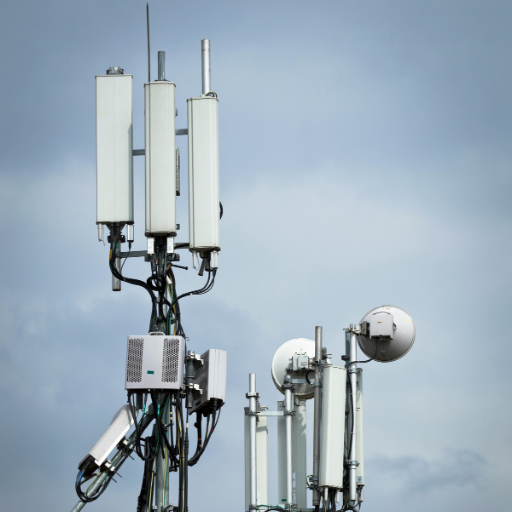


SRT Transceiver
Overview
The SRT Transceiver is DigiCAP’s flexible, scalable solution for securely transporting STL streams over diverse IP networks. Acting as a protocol bridge, it enables reliable ATSC 3.0 STLTP delivery across both managed and unmanaged networks with full redundancy. Its robust design ensures stable, low-latency transmission even in mixed or unpredictable network environments. For broadcasters like TV Globo, it provides a cost-effective way to distribute STLTP signals with confidence and consistency.
Key Features
The SRT Transceiver is essential for modern STLTP delivery with key features like:
- Protocol conversion
- Multi-channel support
- Scalable routing
- Secure transport
- Flexible deployment
Why SRT Transceiver
In nationwide rollouts like Brazil’s TV 3.0, broadcasters must extend STLTP across heterogeneous networks without compromising security, quality, or latency. The SRT Transceiver provides:
- Operational flexibility
- Cost-efficiency
- Reliability
- Future-readiness
- Error correction via FEC
Specifications

Standards Support
ATSC 3.0 STLTP (A/324), SRT protocol.

Channels
Supports multi-channel STLTP + FEC transmission.

Routing
Point-to-point or one-to-many distribution.

Deployment
Software-based, runs on COTS or virtualized environments.

Security
Encryption and FEC for transport protection.

Architecture
Core Platform Capabilities
- Ingress : Accepts STLTP streams from DigiCaster or headend systems.
- Protocol engine : Converts STLTP into SRT or other supported transport profiles.
- Distribution : Routes STL streams securely to multiple transmitter sites.
- Redundancy layer : Supports FEC and multiple simultaneous outputs for reliability.
- Inputs : STLTP streams from DigiCaster.
- Outputs : STLTP over SRT, with optional FEC redundancy.
- Multi-destination routing : One-to-many signal distribution.
- Encrypted SRT transport : For secure STL over public networks.
